
Multimodal & Crossmodal Interface
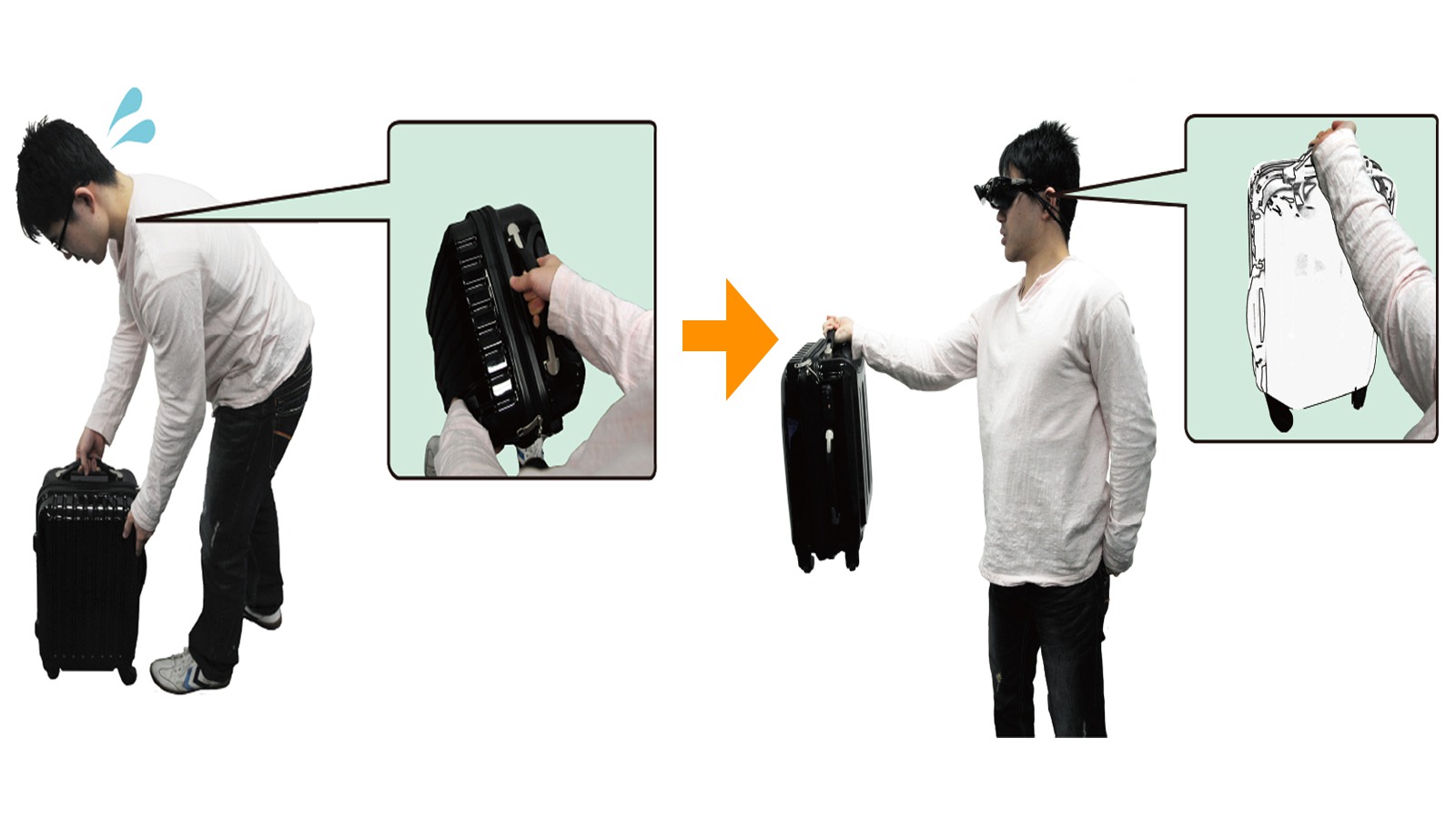
Augmented Endurance
'Augmented Endurance' modifies perception of fatigue during handling midium-weight objects and augments our endurance by affecting our weight perception with AR technology
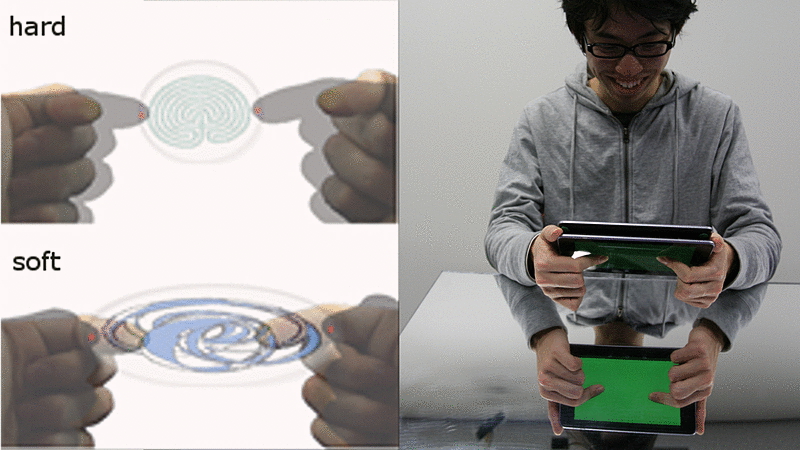
ARAtouch
'ARAtouch' is a visuo-haptic system which is able to evoke the haptic sensation on the mobile device, without any haptic devices, only using haptic illusio
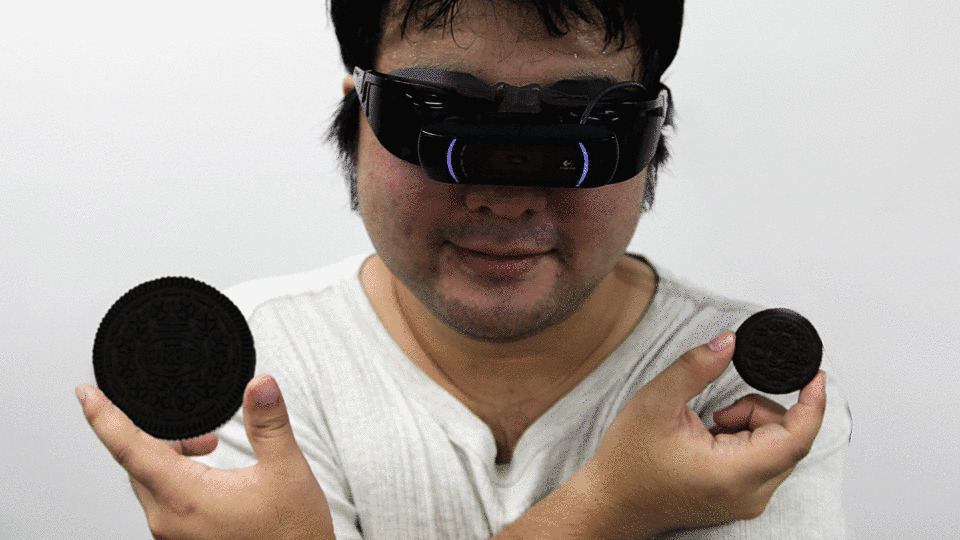
Augmented Satiety
'Augmented Satiety' is a method for modifying perception of satiety and controlling nutritional intake by changing the apparent size of food with augmented reality.

Effect of Self-avatar Appearance in VR
We examine how avatar realism affects perceived object sizes as the size of the virtual hand changes via “body-based scaling”.
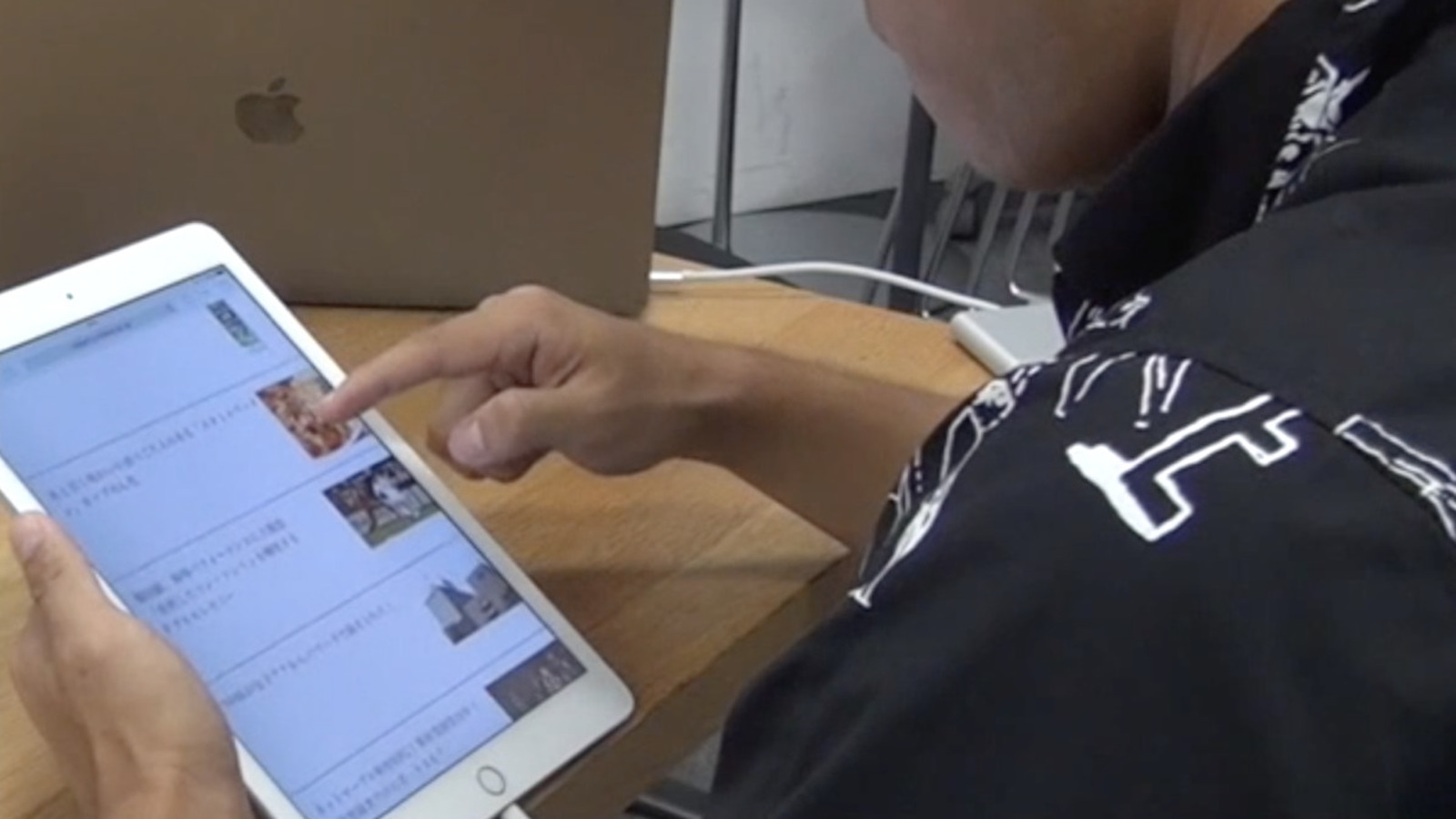
Content-aware Browsing by Pseudo-haptic Feedback
This study investigates the effect of pseudo-haptic feedback, which is rendered based on visuo-haptic interaction with a touch screen, on a memory task during information browsing.
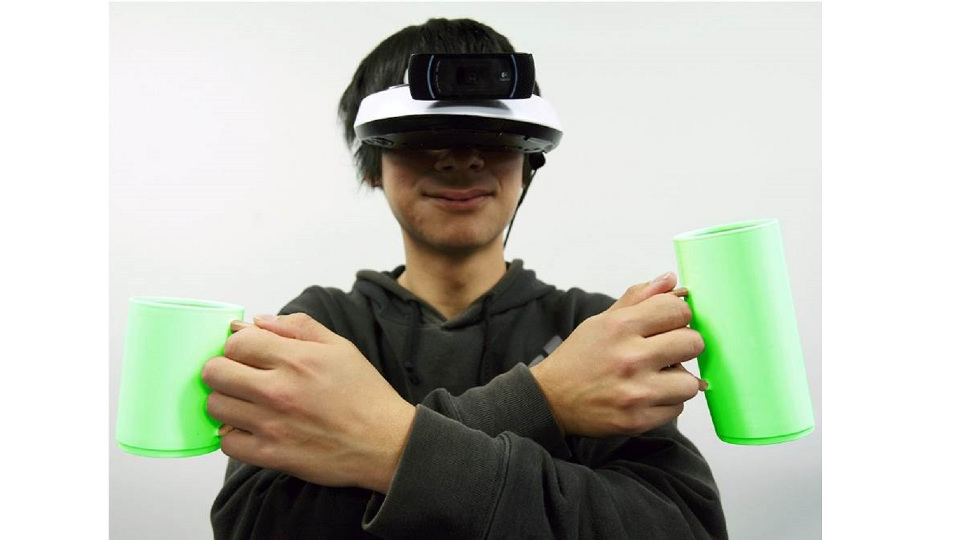
Improvement of drinking habit with augmented reality
This research proposes a system for implicitly influencing the satisfaction we experience while drinking a beverage and for controlling beverage consumption.
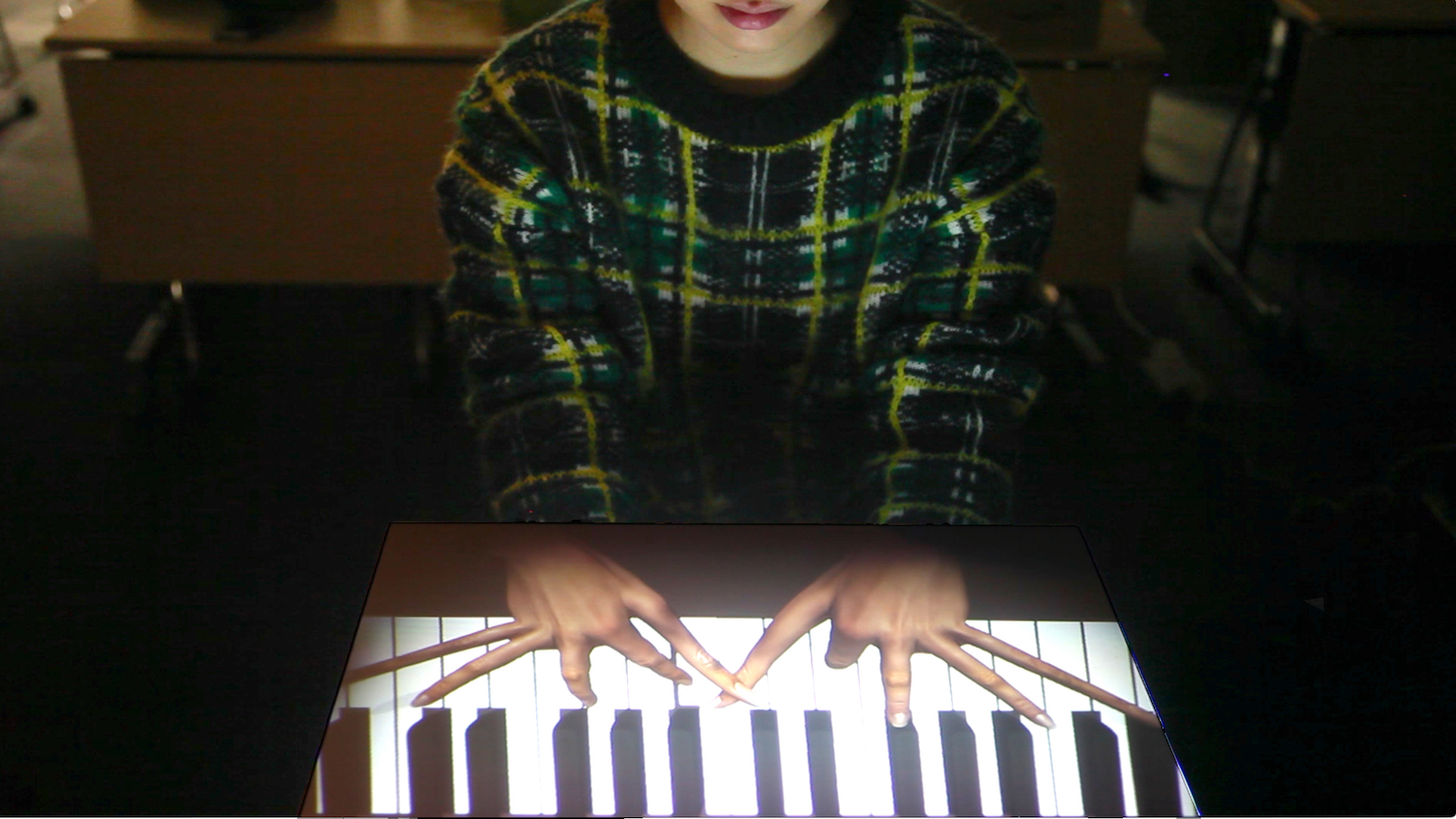
Metamorphosis Hand
Metamorphosis Hand provides users with interactive experiences of altering perceptual body image.
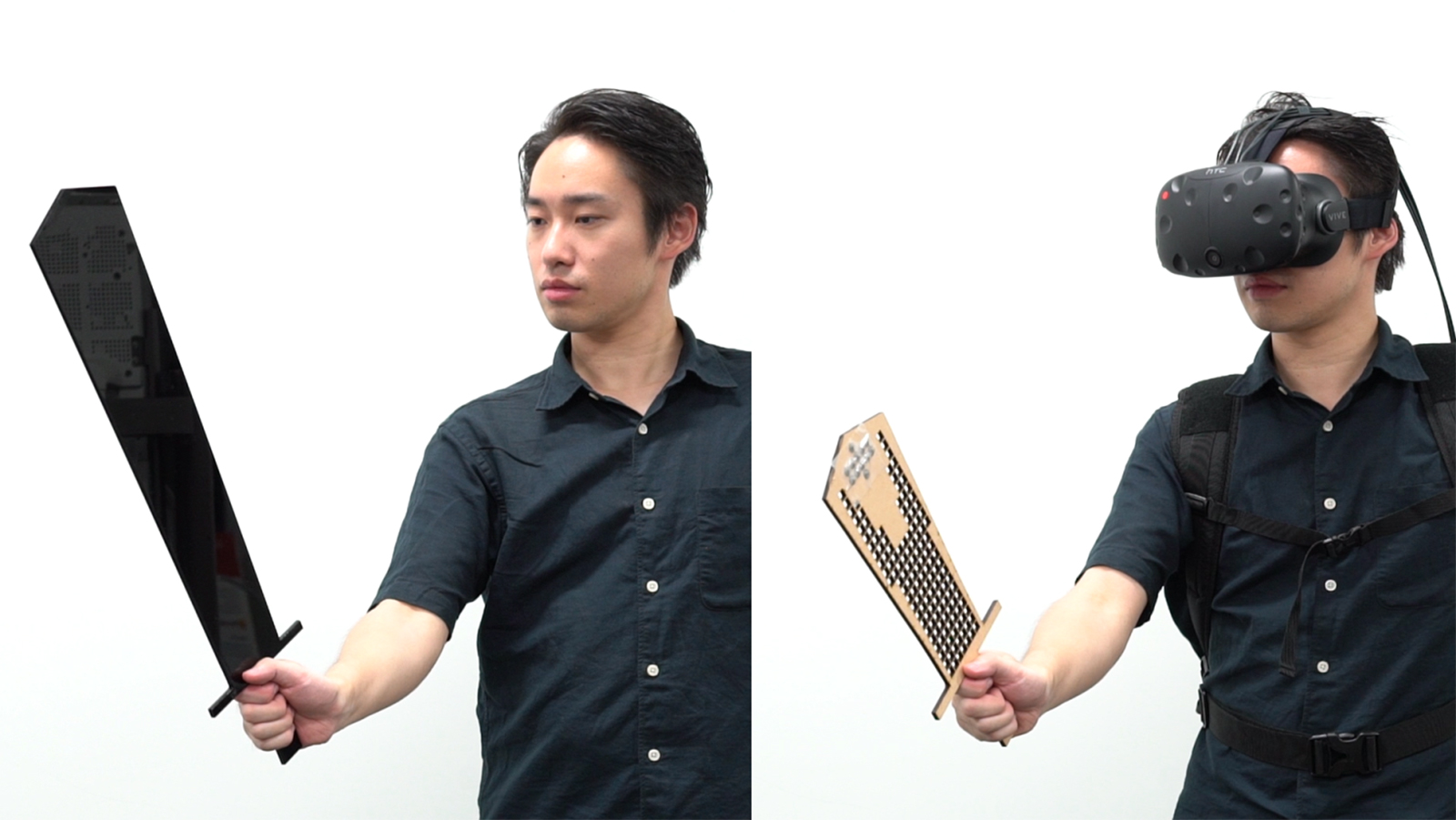
Illusion Controller
We propose a novel method for designing hand-held VR controllers which illusorily represent haptic equivalent of visual shape in VR.

Infinite Stairs
Infinite Stairs provides users with virtual reality (VR) experiences, wherein users feel as if they are ascending/descending stairs through passive haptic feedback.

MagicPot
'Magic Pot' enables us to experience a haptic illusion as if users were touching a virtual magic pot shaped by users, even though they are touching only a physically static cylinder in fact.
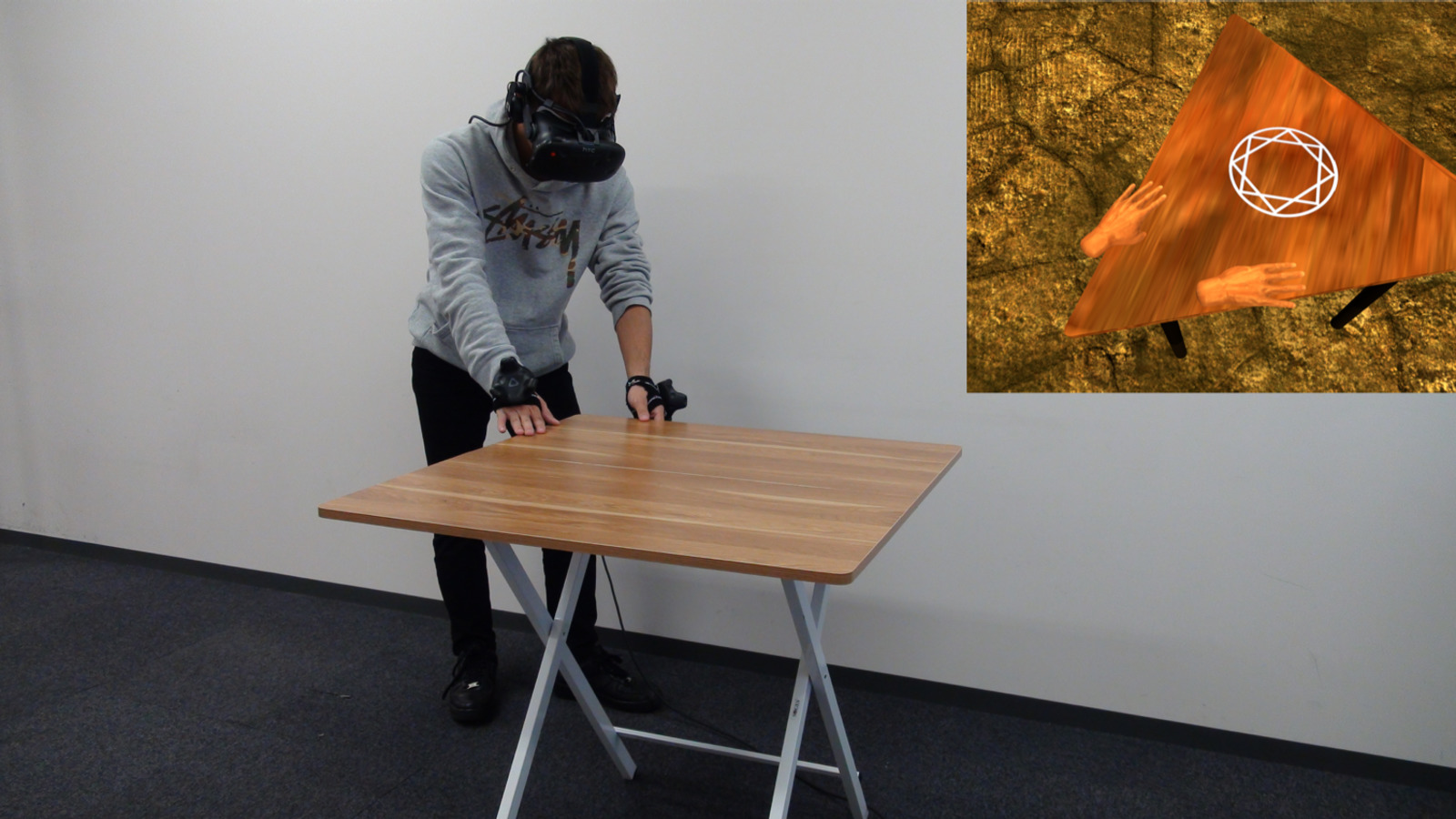
Magic Table
This is a system that presents a sense of table deformation by combining redirection and pseudo-haptic.
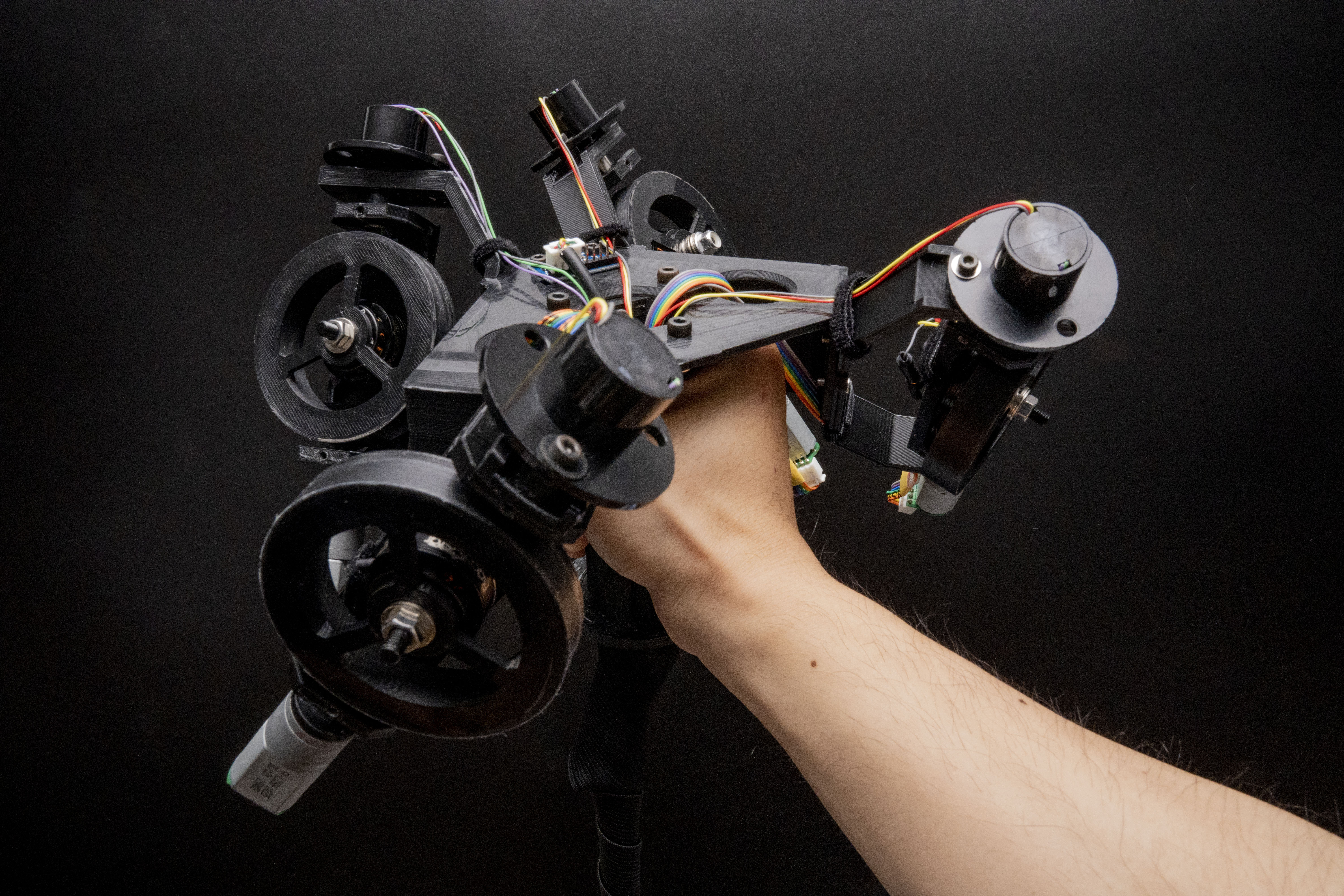
MetamorphX
This is a study on non-contact force feedback devices designed to replicate the forces of inertia, viscosity, and rigidity experienced by humans when handling tools.
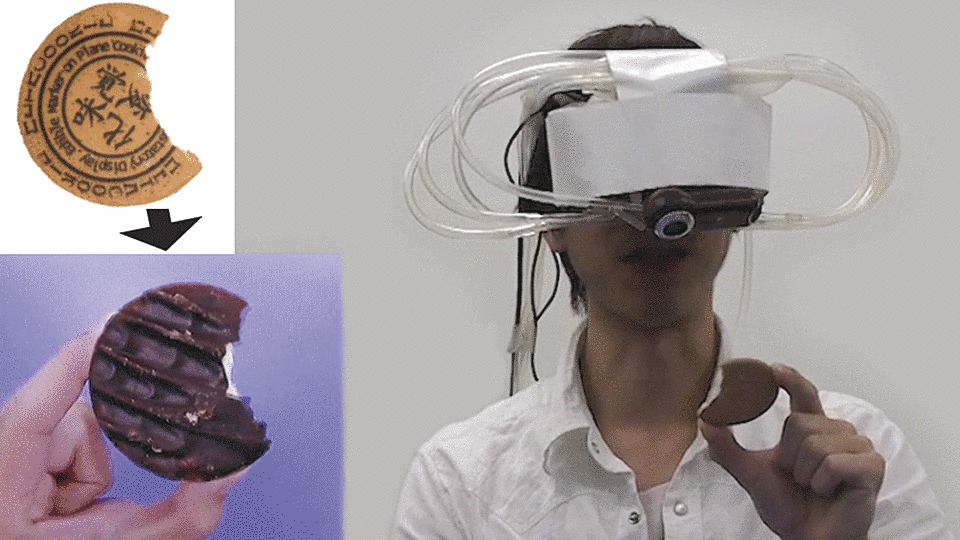
Meta Cookie
'Meta Cookie' is a cross-modal gustatory display to change perceived taste of a cookie by overlaying visual and olfactory information onto a real cookie by using augmented reality.
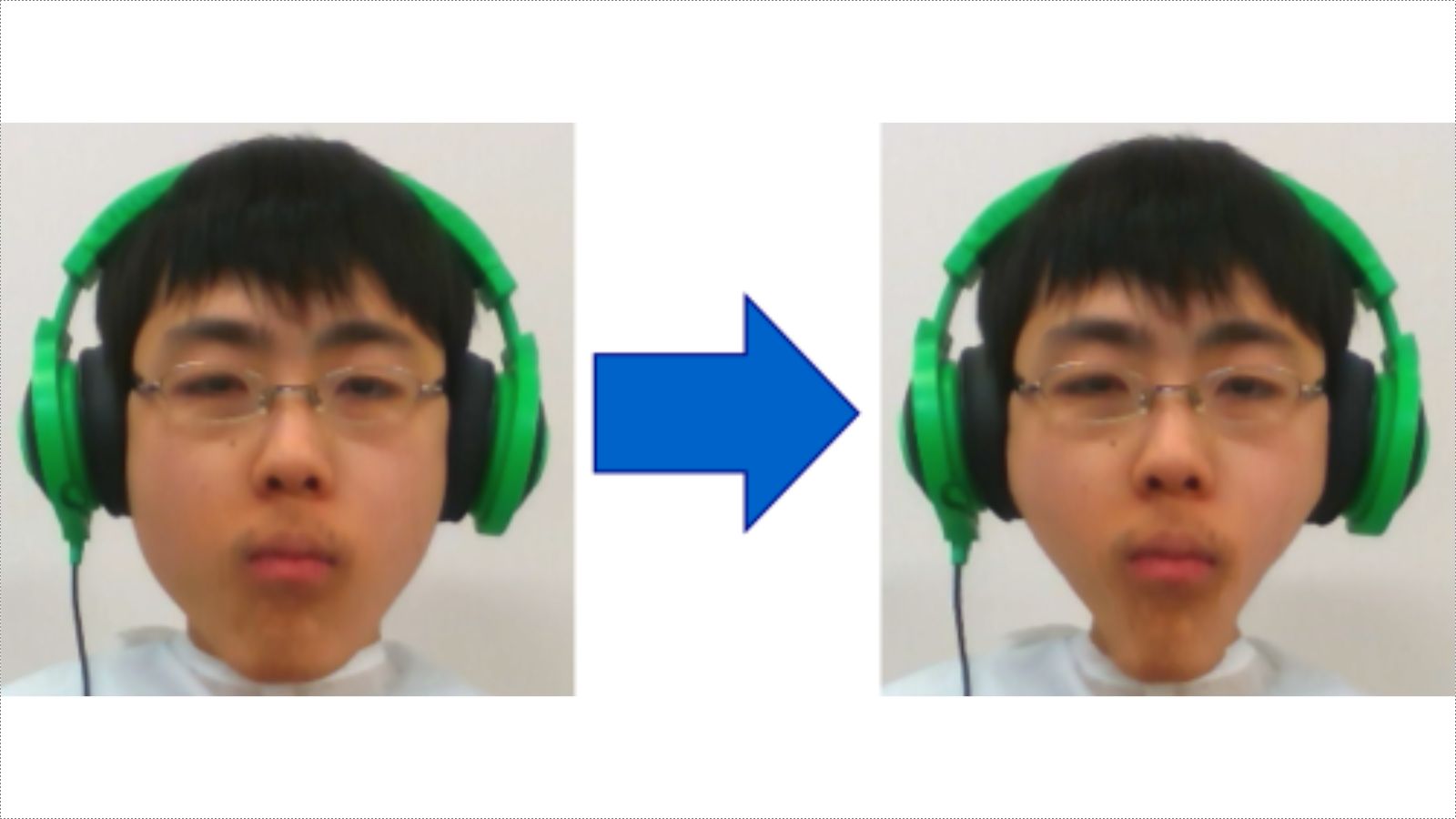
Food texture manipulation by the visual presentation of modified chewing movements
This system aims to present visually modified mastication movements in real-time to manipulate the perception of food texture.

SomatoShift
This is research on wearable force feedback devices designed to alter human body sensations or enhance physical capabilities.
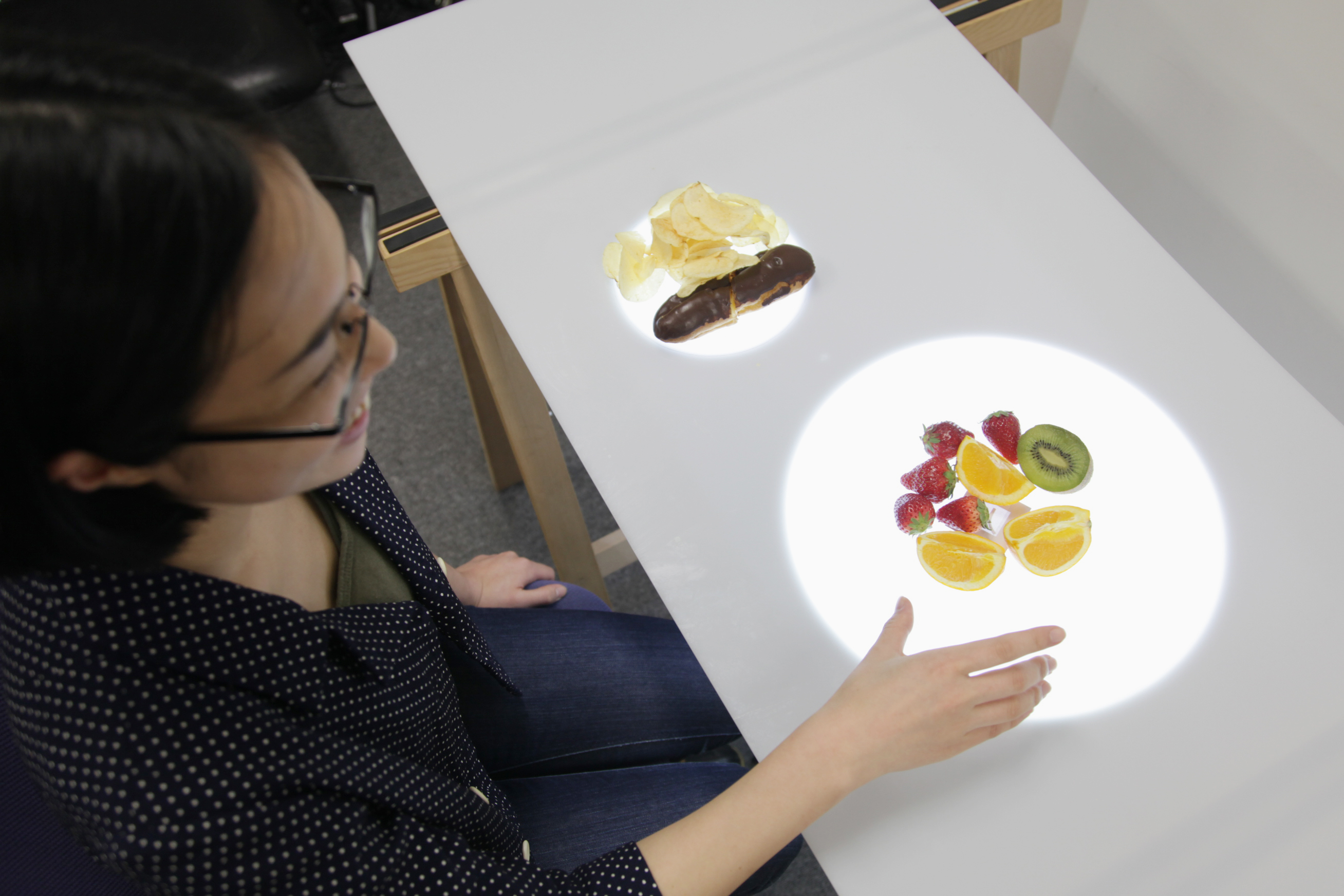
Tabletop Augmented Satiety
This is a tabletop system for affecting our perception of satiety and controlling energy intakes by controlling a size of a projected image around the food.
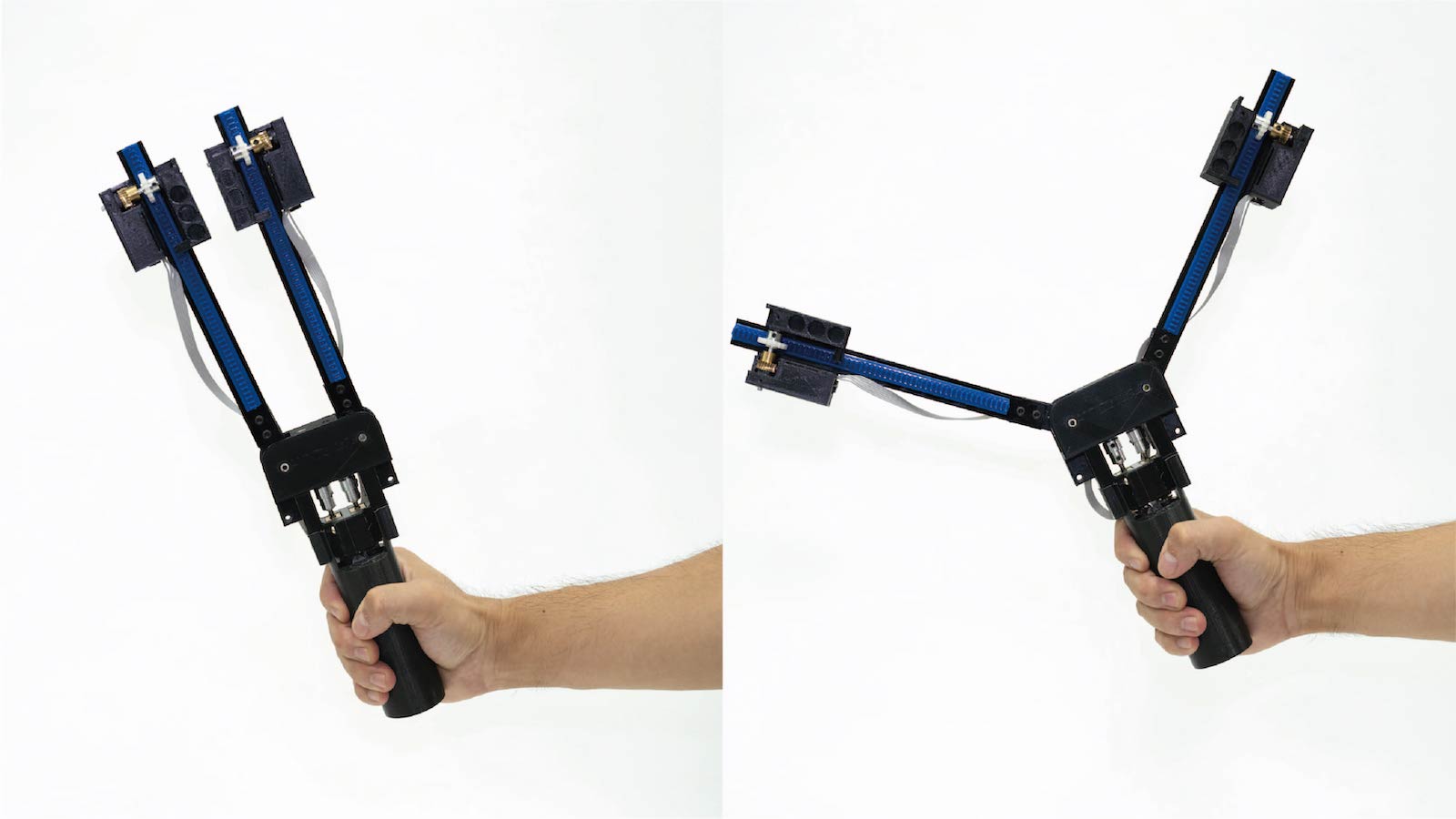
Transcalibur
Transcalibur is a hand-held VR controller that dynamically and illusorily changes the perceived shape of a 2D object.
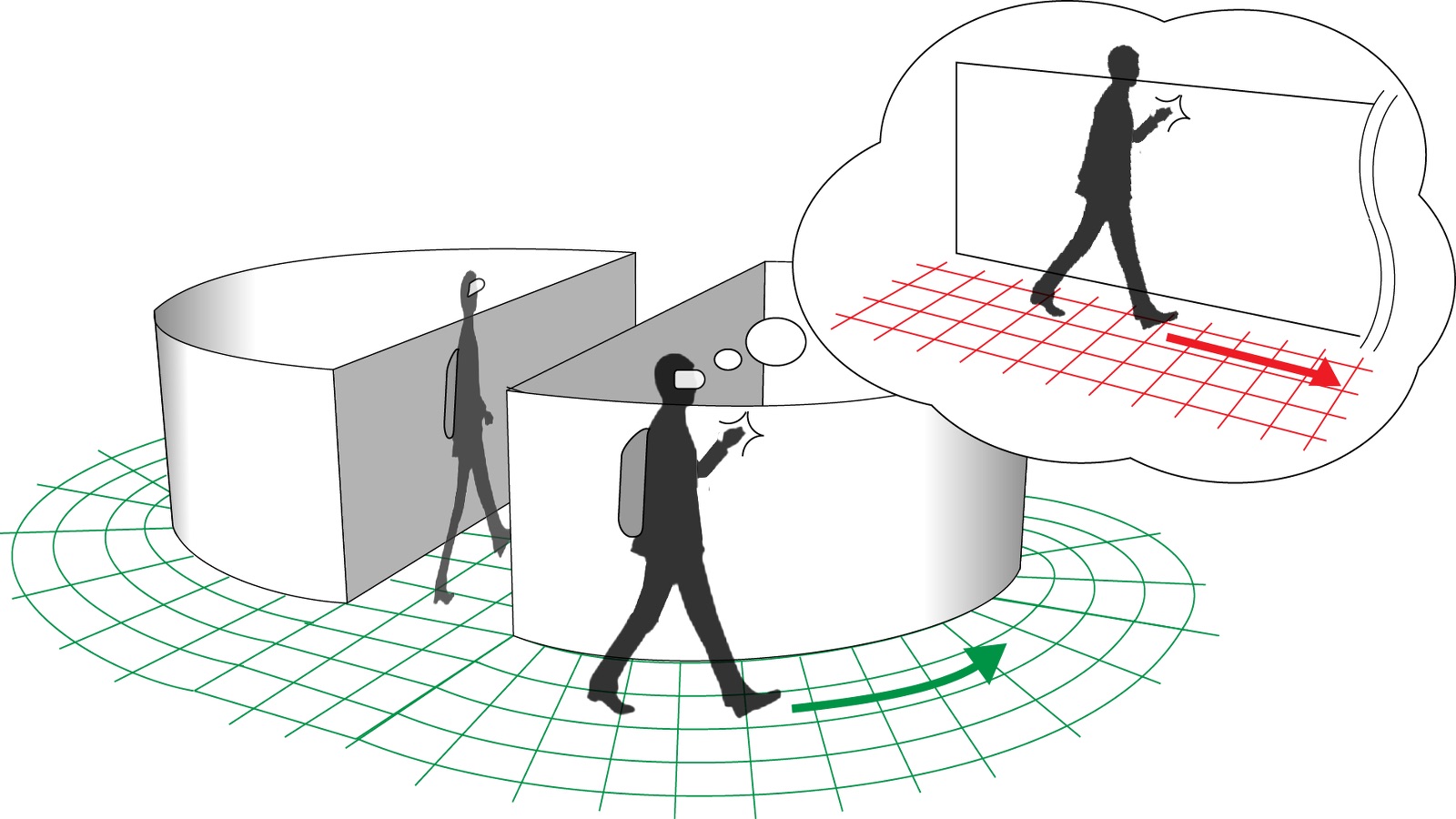
Visuo-Haptic Redirected Walking
We propose a method for improving the effects of manipulation in redirected walking (RDW) by using haptic cues, particularly for the discrimination of path curvature. We develop an RDW system, which displays a visual representation of a flat wall and users virtually walk straight along it although, in reality, users walk along a convex surface wall with touching it. Using this system, we conduct an experiment, and the results show that our method reduced the amount of perceived curvature in RDW as compared to an only visual method.
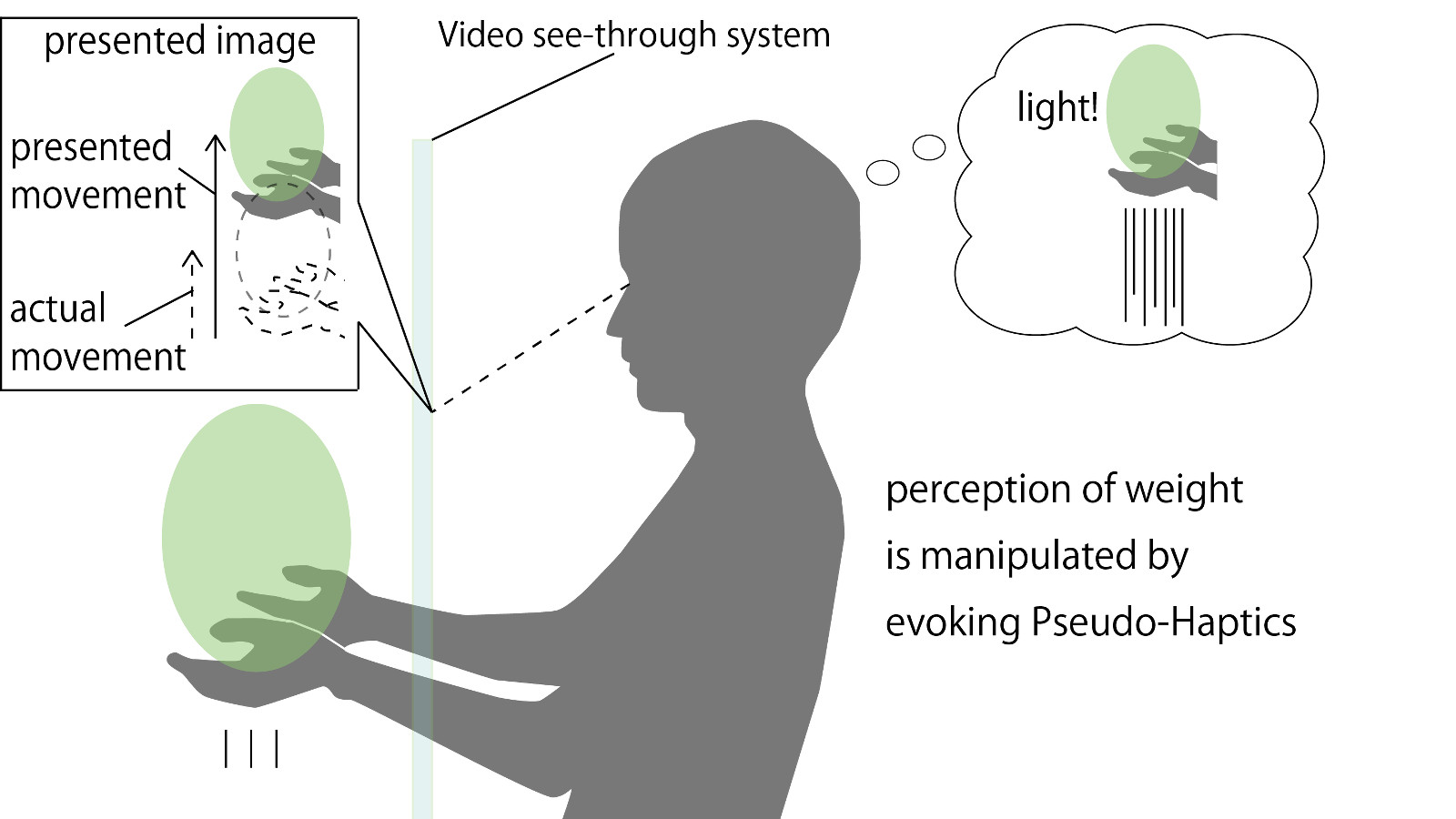
User Support of Physical Labor using Pseudo-haptics in a Mixed Reality Space
We managed to enhance the performance of object lifting tasks by modifying the visual movement to manipulate the perception of weight.
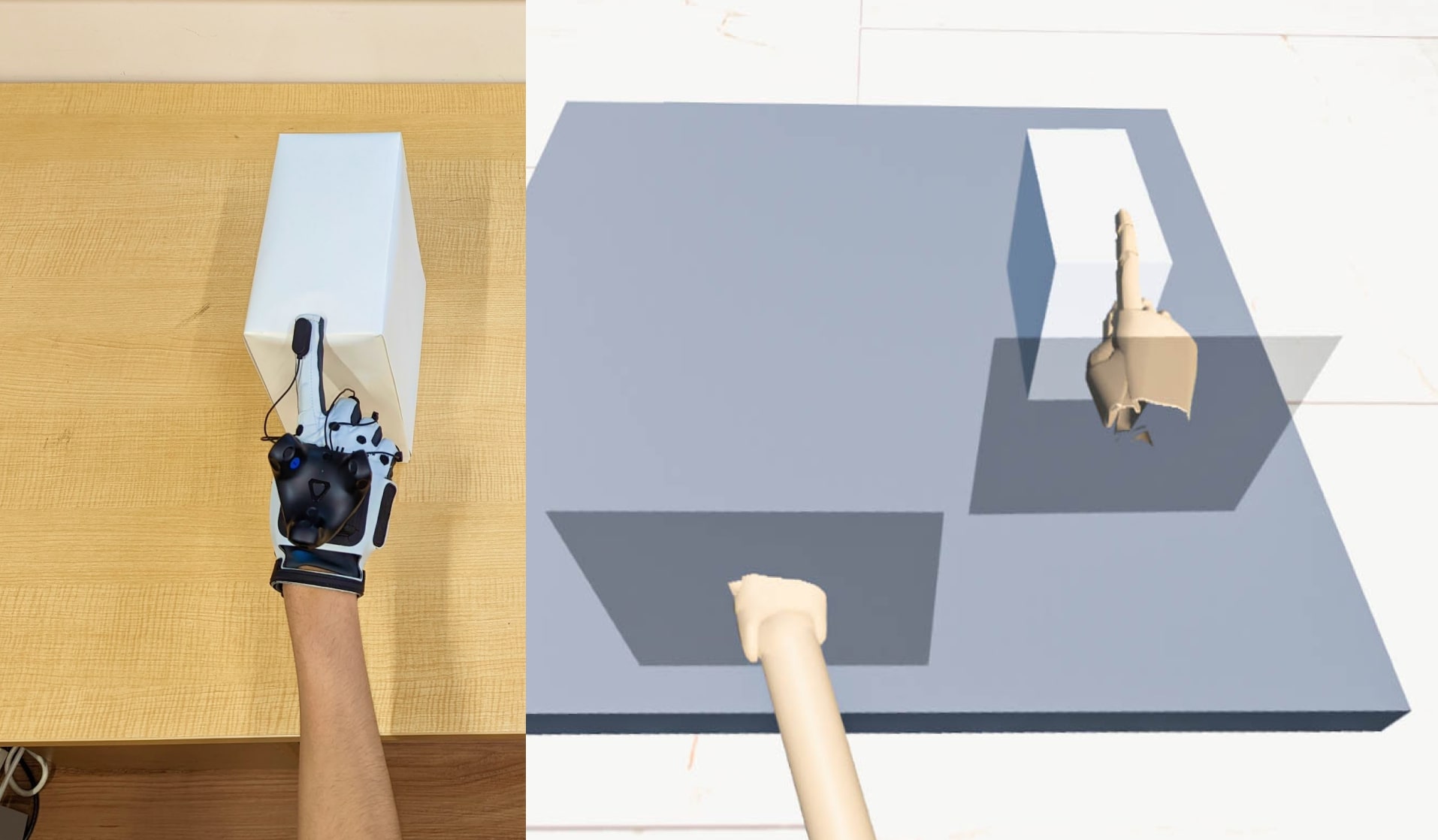
Wormhole
Using a "wormhole" in virtual reality (VR), we employ a technique that significantly offsets the position of virtual hands from their actual counterparts, allowing users to experience the sensation of interacting with objects located in positions divergent from reality.
Augmented Endurance
'Augmented Endurance' modifies perception of fatigue during handling midium-weight objects and augments our endurance by affecting our weight perception with AR technology
ARAtouch - Visuo-Haptic interaction with Mobile Rear Touch Interface
'ARAtouch' is a visuo-haptic system which is able to evoke the haptic sensation on the mobile device, without any haptic devices, only using haptic illusio
Augmented Satiety
'Augmented Satiety' is a method for modifying perception of satiety and controlling nutritional intake by changing the apparent size of food with augmented reality.
Virtual Hand Realism Affects Object Size Perception in Body-Based Scaling
We examine how avatar realism affects perceived object sizes as the size of the virtual hand changes via “body-based scaling”.
Content-aware Browsing by Pseudo-haptic Feedback on Touch Screens
This study investigates the effect of pseudo-haptic feedback, which is rendered based on visuo-haptic interaction with a touch screen, on a memory task during information browsing.
Improvement of drinking habit with augmented reality
This research proposes a system for implicitly influencing the satisfaction we experience while drinking a beverage and for controlling beverage consumption.
Metamorphosis Hand:Interactive Experience of Embodying Virtually Transformed Hands
Metamorphosis Hand provides users with interactive experiences of altering perceptual body image.
Computational Design of Hand-Held VR Controllers Using Haptic Shape Illusion
We propose a novel method for designing hand-held VR controllers which illusorily represent haptic equivalent of visual shape in VR.
Infinite Stairs - simulating virtual stairs based on passive haptics
Infinite Stairs provides users with virtual reality (VR) experiences, wherein users feel as if they are ascending/descending stairs through passive haptic feedback.
MagicPot
'Magic Pot' enables us to experience a haptic illusion as if users were touching a virtual magic pot shaped by users, even though they are touching only a physically static cylinder in fact.
Magic Table
This is a system that presents a sense of table deformation by combining redirection and pseudo-haptic.
MetamorphX
This is a study on non-contact force feedback devices designed to replicate the forces of inertia, viscosity, and rigidity experienced by humans when handling tools.
Meta Cookie
'Meta Cookie' is a cross-modal gustatory display to change perceived taste of a cookie by overlaying visual and olfactory information onto a real cookie by using augmented reality.
Food texture manipulation by the visual presentation of modified chewing movements
This system aims to present visually modified mastication movements in real-time to manipulate the perception of food texture.
SomatoShift
This is research on wearable force feedback devices designed to alter human body sensations or enhance physical capabilities.
Tabletop Augmented Satiety
This is a tabletop system for affecting our perception of satiety and controlling energy intakes by controlling a size of a projected image around the food.
Transaclibur:A Weight Shifting VR Controller based on Computational Perception Model
Transcalibur is a hand-held VR controller that dynamically and illusorily changes the perceived shape of a 2D object.
Visuo-Haptic Redirected Walking
We propose a method for improving the effects of manipulation in redirected walking (RDW) by using haptic cues, particularly for the discrimination of path curvature. We develop an RDW system, which displays a visual representation of a flat wall and users virtually walk straight along it although, in reality, users walk along a convex surface wall with touching it. Using this system, we conduct an experiment, and the results show that our method reduced the amount of perceived curvature in RDW as compared to an only visual method.
User Support of Physical Labor using Pseudo-haptics in a Mixed Reality Space
We managed to enhance the performance of object lifting tasks by modifying the visual movement to manipulate the perception of weight.
Wormhole
Using a "wormhole" in virtual reality (VR), we employ a technique that significantly offsets the position of virtual hands from their actual counterparts, allowing users to experience the sensation of interacting with objects located in positions divergent from reality.
Copyright © 2023, Kuzuoka Narumi Lab., All Rights Reserved.