
Projects

Multimodal & Crossmodal Interface
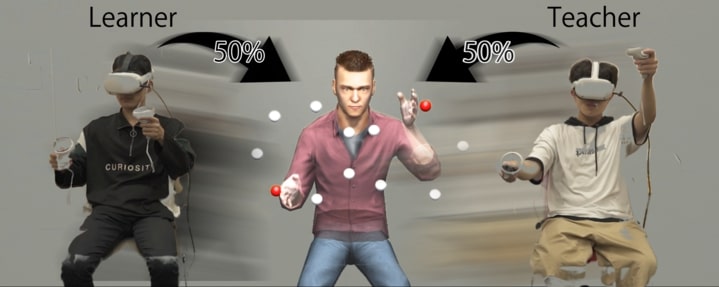
While visual and auditory information are mainly used for exsiting interfaces, other modalities are not used much. We are developing multi-modal interfaces such as haptic, olfactory and gustatory displays in order to realize intuitive virtual reality environments. Moreover, we are focusing on cross-modal interfaces which present ultra-realistic experience with limited sensory information by using cross-modal interactions.
CSCW
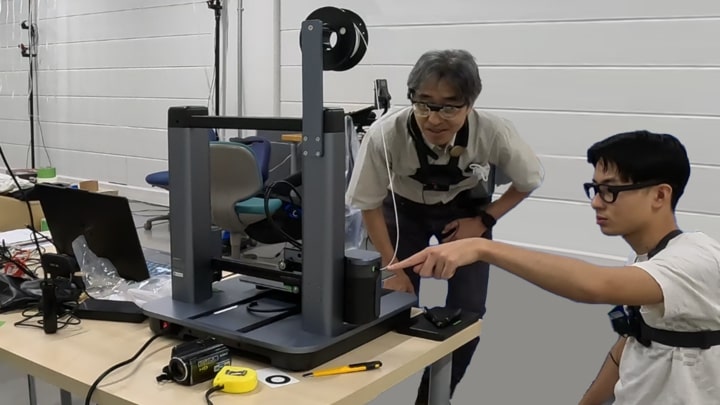
CSCW (Computer-Supported Cooperative Work) is a research field focused on using computers to support diverse collaborative work and communication. In this field, alongside the development of innovative technologies, interdisciplinary research is promoted to understand how people interact in the first place through analysis and evaluation studies. As a result of such research, various technologies have been created, including video conferencing systems, social network services, recommendation systems, telepresence robots, and more.
Digital Museum
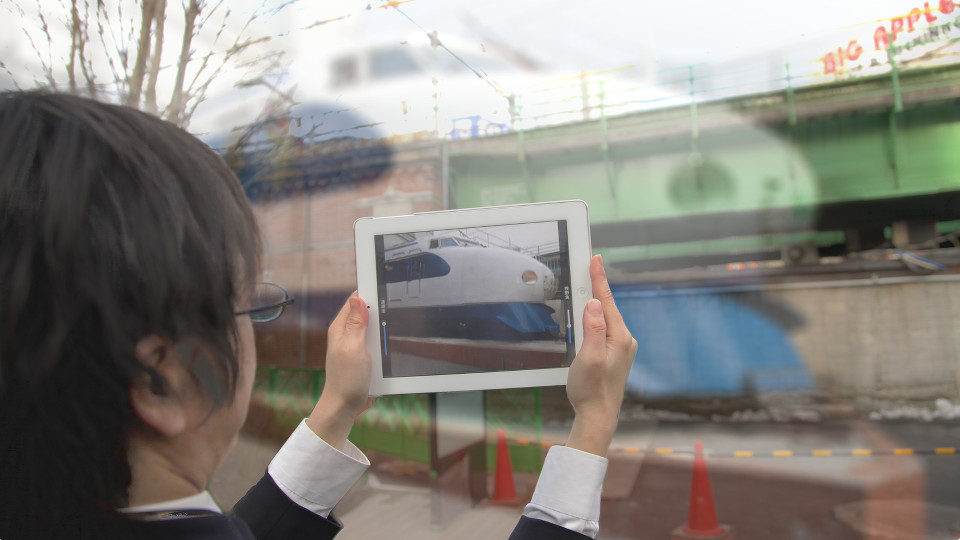
In museums, digital technology can be used to tell the background information about their exhibits. In this project, we aim to realize exhibits that merges the exhibits itself and their context, totally support the museum experience, and digital technology for the museum.
Digital Public Art
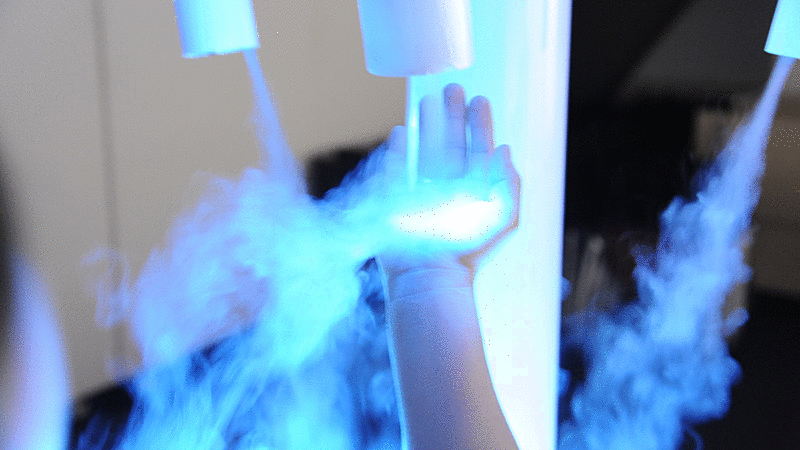
Digital Public Art is a new genre of art produced by bringing information technology into public spaces and evolving media art into public art. We are convinced that by fusing the interactive and global characteristics of media technology - think of computers - with the powerful presence and the ability to transform locations of public art - think of sculpture - we can transcend these separate viewpoints to stimulate people's awareness of media technology.

FoodLog
"Life Log Infrastructure for Food" project is a cooperative research with Aizawa Lab. and Sasaki Lab. at the Univ. of Tokyo, KDDI R&D Lab., and foo.log Inc. "Food" is one of the most important and regularly consumed factor in our daily life. However, so far, this has rarely been viewed as an object of information processing. In this research, we aim at developing an infrastructure for lifelog, with emphasis on food and food-related activities in our daily life. Especially our laboratory focuses on the method to capture, analyse, visualize and utilize food-related activities.
Lifelog-based Future Prediction
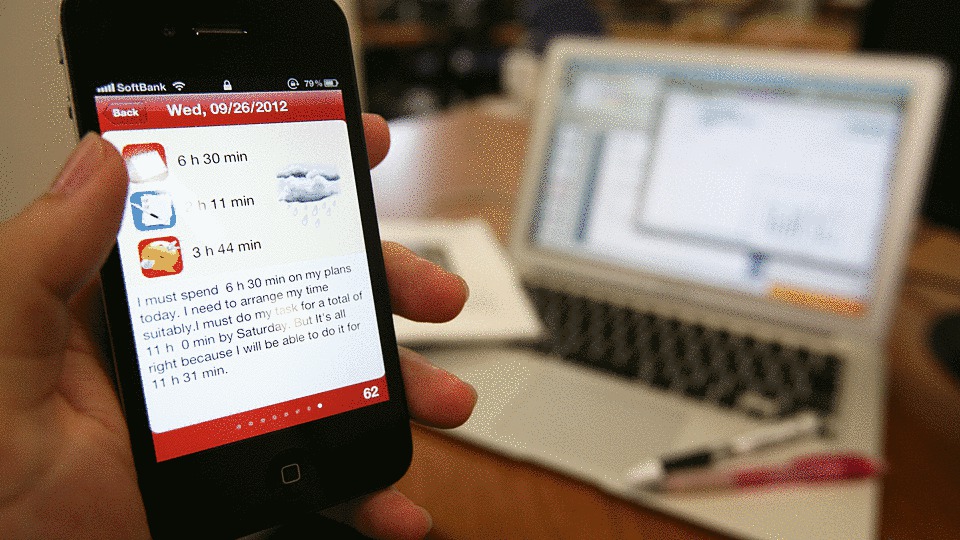
"Lifelog" records an individual's life and activities as digital data over a long period of time. The ability to record, organize, and view the entire past is the strength of Lifelog, but we also believe in its potential to learn about one's future by using such huge amounts of personal data. In this project, we use lifelogging technology to predict the future by looking at consumption behavior, task management, traffic congestion on highways, and so on. Furthermore, we are also attempting to induce changes in users' behavior by providing feedback to them.
Subjective VR & Reflex-based Interface
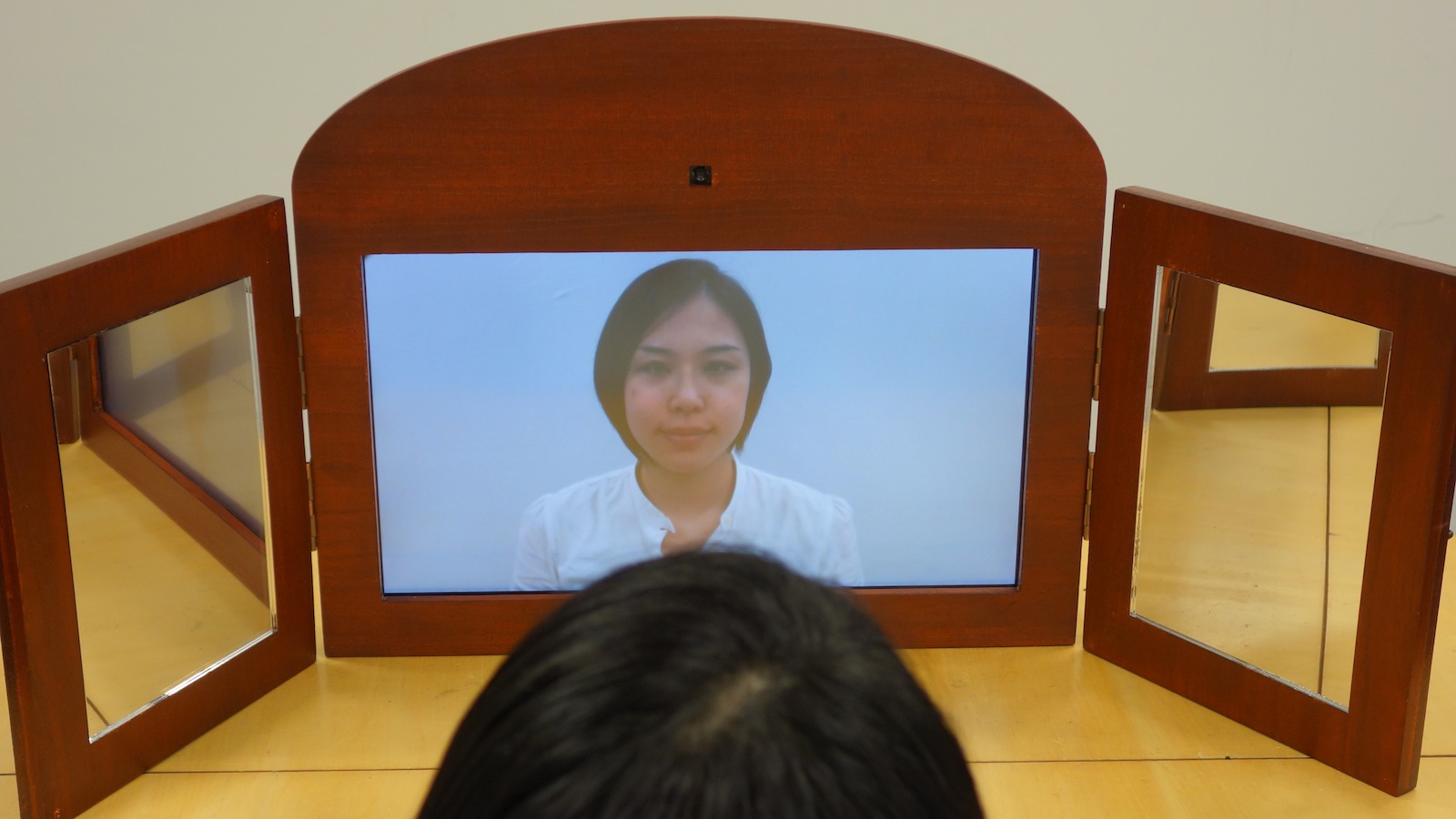
The purpose of this project involved assessing the efficacy of computer-generated emotion and establishing a method for integrating emotional experience. In the field of cognitive science, the ability to alter a bodily response has been shown to unconsciously generate emotions. We therefore hypothesized emotional experience could be manipulated by having people recognize pseudo-generated bodily reactions as changes to their own bodily reactions and are developing emotion evoking interfaces.
Senior Cloud
ICT Platform for Improving Society by Circulating the Experience, Knowledge, and Skills of the Elderly

Transcendent Telepresence
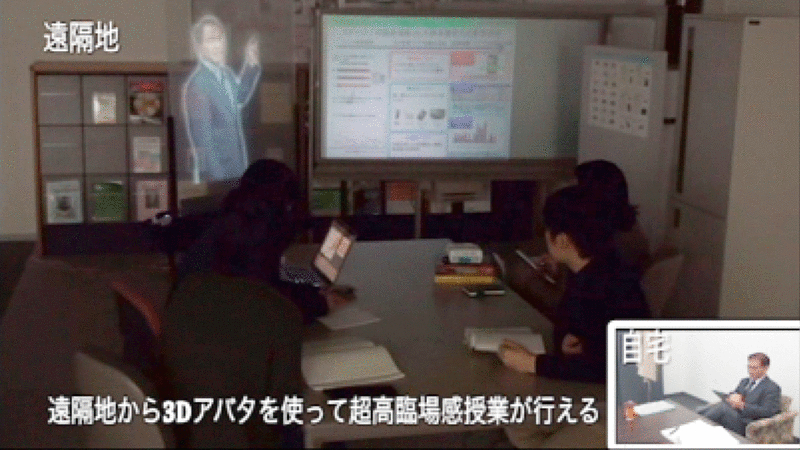
Many previous studies on telepresence have extensively investigated conveying distant places exactly. However, it is not necessarily effective to convey exact information. We believe that the capability to transmit information in a modified form is an advantage of telepresence. Thus, we proposed ‘‘Transcendent Telepresence,’’ which uses this advantage positively. We aim to achieve remote communication that is superior to face-to-face communication.
Physical Space Oriented Tele-Communication
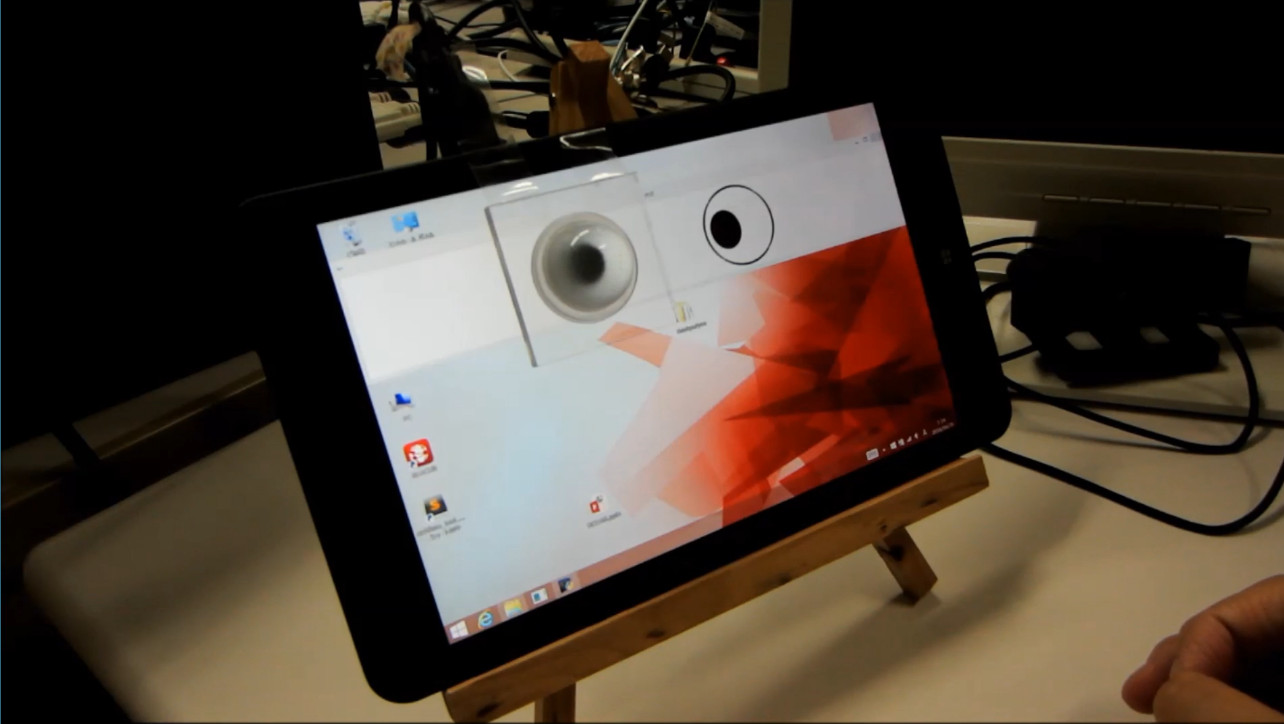
Many of the studies in tele-communication focuses on showing remote participants’ faces and sharing digitized documents. However, many tasks still require participants to share physical objects. We are developing system to support tele-communication that needs to share objects in the physical environment.
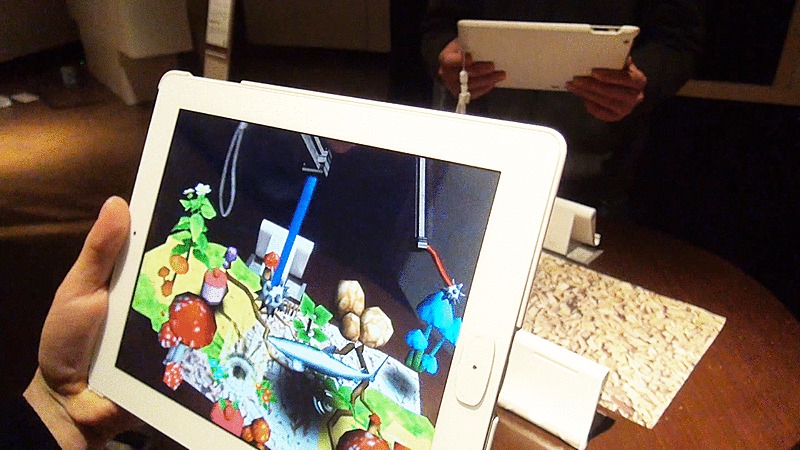
Multimodal & Crossmodal Interface
While visual and auditory information are mainly used for exsiting interfaces, other modalities are not used much. We are developing multi-modal interfaces such as haptic, olfactory and gustatory displays in order to realize intuitive virtual reality environments. Moreover, we are focusing on cross-modal interfaces which present ultra-realistic experience with limited sensory information by using cross-modal interactions.
CSCW
CSCW (Computer-Supported Cooperative Work) is a research field focused on using computers to support diverse collaborative work and communication. In this field, alongside the development of innovative technologies, interdisciplinary research is promoted to understand how people interact in the first place through analysis and evaluation studies. As a result of such research, various technologies have been created, including video conferencing systems, social network services, recommendation systems, telepresence robots, and more.
Digital Museum
In museums, digital technology can be used to tell the background information about their exhibits. In this project, we aim to realize exhibits that merges the exhibits itself and their context, totally support the museum experience, and digital technology for the museum.
Digital Public Art
Digital Public Art is a new genre of art produced by bringing information technology into public spaces and evolving media art into public art. We are convinced that by fusing the interactive and global characteristics of media technology - think of computers - with the powerful presence and the ability to transform locations of public art - think of sculpture - we can transcend these separate viewpoints to stimulate people's awareness of media technology.
FoodLog
"Life Log Infrastructure for Food" project is a cooperative research with Aizawa Lab. and Sasaki Lab. at the Univ. of Tokyo, KDDI R&D Lab., and foo.log Inc. "Food" is one of the most important and regularly consumed factor in our daily life. However, so far, this has rarely been viewed as an object of information processing. In this research, we aim at developing an infrastructure for lifelog, with emphasis on food and food-related activities in our daily life. Especially our laboratory focuses on the method to capture, analyse, visualize and utilize food-related activities.
Lifelog-based Future Prediction
"Lifelog" records an individual's life and activities as digital data over a long period of time. The ability to record, organize, and view the entire past is the strength of Lifelog, but we also believe in its potential to learn about one's future by using such huge amounts of personal data. In this project, we use lifelogging technology to predict the future by looking at consumption behavior, task management, traffic congestion on highways, and so on. Furthermore, we are also attempting to induce changes in users' behavior by providing feedback to them.
Subjective VR & Reflex-based Interface
The purpose of this project involved assessing the efficacy of computer-generated emotion and establishing a method for integrating emotional experience. In the field of cognitive science, the ability to alter a bodily response has been shown to unconsciously generate emotions. We therefore hypothesized emotional experience could be manipulated by having people recognize pseudo-generated bodily reactions as changes to their own bodily reactions and are developing emotion evoking interfaces.
Senior Cloud
ICT Platform for Improving Society by Circulating the Experience, Knowledge, and Skills of the Elderly
Transcendent Telepresence
Many previous studies on telepresence have extensively investigated conveying distant places exactly. However, it is not necessarily effective to convey exact information. We believe that the capability to transmit information in a modified form is an advantage of telepresence. Thus, we proposed ‘‘Transcendent Telepresence,’’ which uses this advantage positively. We aim to achieve remote communication that is superior to face-to-face communication.
Physical Space Oriented Tele-Communication
Many of the studies in tele-communication focuses on showing remote participants’ faces and sharing digitized documents. However, many tasks still require participants to share physical objects. We are developing system to support tele-communication that needs to share objects in the physical environment.
Copyright © 2023, Kuzuoka Narumi Lab., All Rights Reserved.